
Cat Tail Signals Explained: Fear, Excitement, Confidence, and Play Behavior
Discover why cats puff up their tails, arch their backs, or “bottle-brush” when startled. Learn how to interpret fear vs play vs overstimulation.

Why Does My Cat Puff Up Its Tail? Understanding Feline Body Language.
One moment your cat is calm—the next, its tail explodes into a giant bottle-brush.Although it looks dramatic, this body language is one of the clearest emotional signals cats use.
1. The Classic “Bottle-Brush” Tail Is a Fight-or-Flight Reflex
When a cat feels suddenly threatened:
-
The tail fluffs
-
Fur stands on end
-
The back arches
-
The stance widens
This reflex makes the cat appear larger, which discourages predators or rivals.
Common triggers:
-
Sudden loud noises
-
Unexpected movement
-
Another cat entering the room
-
A kitten ambushing an adult
-
Seeing an unfamiliar animal
But not all puffed tails are fear.
2. The Puff Tail Has Several Different Meanings
2.1. Startled Fear
The most classic meaning.The cat freezes, assesses, and either retreats or defends.
Body signs:
-
Wide pupils
-
Tail upright but puffed
-
Ears back
-
Tense body
2.2. Playful Excitement (Common in Kittens)
Kittens often puff up during high-energy play.This is mock-threatening behavior with no actual aggression.
Body signs:
-
Sideways “crab walk”
-
Bouncy movements
-
Quick zoomies
-
Playful vocalizations
2.3. Overstimulation
Too much handling or petting can overstimulate the nervous system, triggering a brief puff.
Body signs:
-
Skin twitching
-
Tail flicking
-
Quick turning of the head
This is a request for space.
2.4. Confidence Display
Some confident cats puff their tail tip during social posturing.
This is more common in multi-cat homes.
3. How to Respond to a Puff Tail
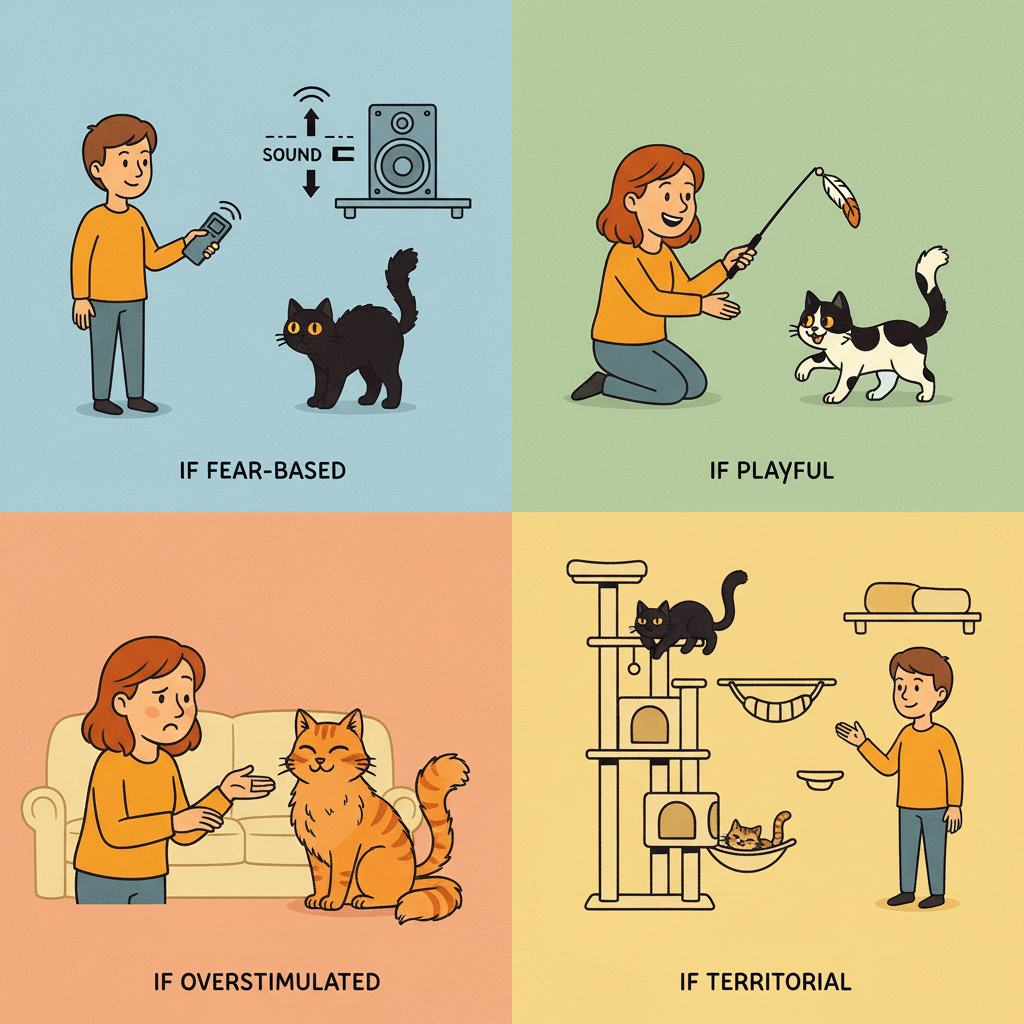
If fear-based:
-
Give space
-
Reduce stimuli
-
Avoid touching suddenly
If playful:
-
Redirect with toys
-
Allow chase and movement
If overstimulated:
-
Stop petting
-
Let the cat decompress
If territorial:
-
Provide escape routes
-
Create multiple elevated areas
4. Puff Tail + Other Signals = The Real Meaning
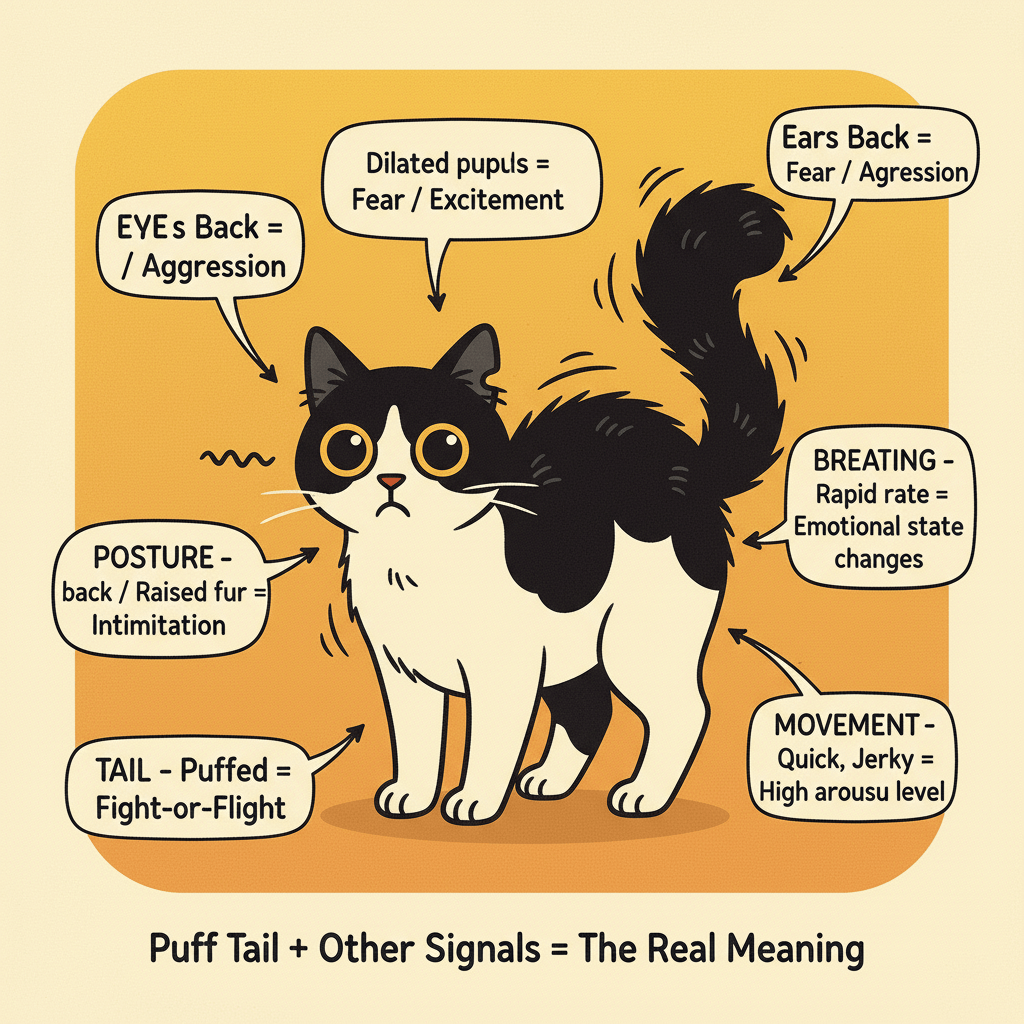
Always read the entire body:
-
Eyes
-
Ears
-
Posture
-
Breathing
-
Movement speed
Tail signals do not exist in isolation.
5. When to Be Concerned
Seek help if:
-
Puffing happens daily
-
The cat shows chronic anxiety
-
There is escalating aggression
-
The cat can’t relax after triggers
Frequent puffing can mean the cat feels unsafe in the home environment.
Summary
A puffed tail is not “bad behavior”—it is emotional communication.When you decode the message correctly, you can respond in a way that supports your cat’s emotional needs and strengthens trust.